


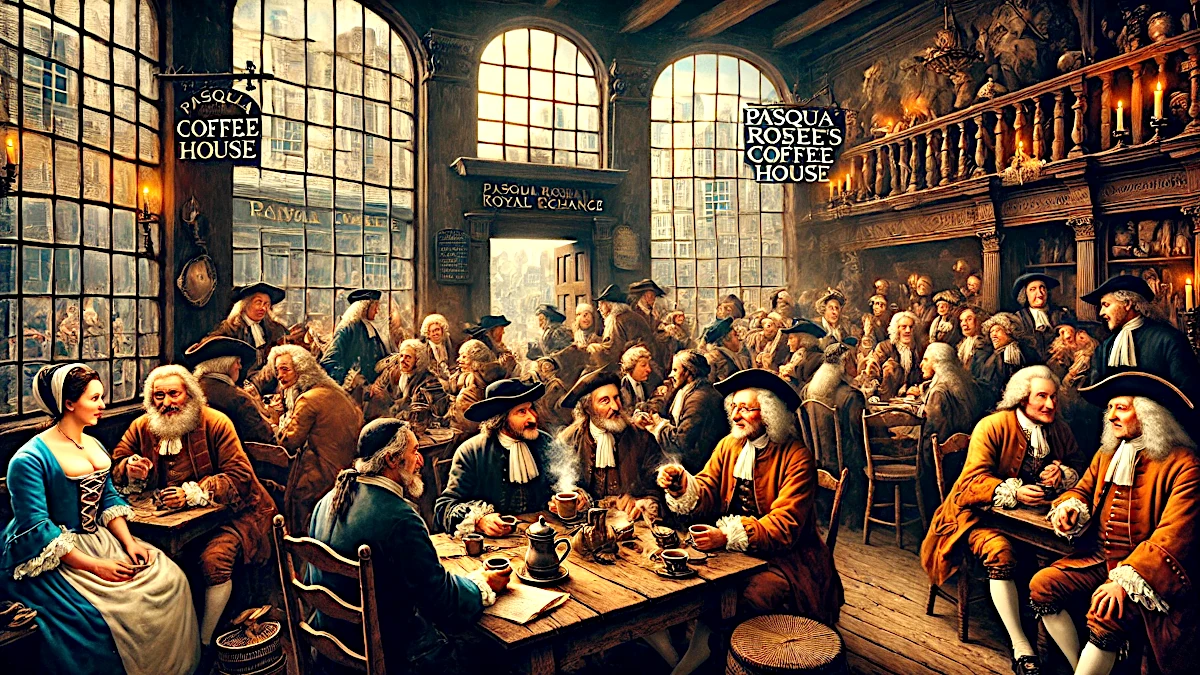
Coffee’s journey to England is a tale of cultural transformation. Introduced in the early 17th century, coffee soon became a symbol of intellectual exchange and social innovation. The opening of the first coffee house in London in 1652 marked the beginning of a new era, one that forever altered the social and intellectual landscape of Britain. In this article, we will explore when coffee was first introduced to England, the rise of London coffee houses, and how they shaped British society.
Table of Contents
The Early Days of Coffee in England
Coffee’s Arrival in England
Coffee was first introduced to England in 1637 by Nathaniel Conopios, a Greek student at Oxford University. Conopios’s introduction of the drink to the intellectual circles of Oxford marked the beginning of coffee’s spread across the country. Initially perceived as an exotic and intellectual beverage, coffee quickly captured the imagination of English scholars.
The First Coffee House in London
In the 1650s, Pasqua Rosee, an Armenian entrepreneur, opened the first official coffee house near the Royal Exchange in London. Between 1652 and 1654, Rosee’s establishment became a bustling hub for merchants, intellectuals, and curious Londoners eager to experience coffee. This was the catalyst for the rapid growth of coffee houses throughout London, marking the beverage’s shift from a curiosity to a cultural phenomenon.
The Rise of London Coffee Houses
Coffee Houses as “Penny Universities”
The term “penny university” was coined to describe the unique environment of London coffee houses. For just the cost of a cup of coffee, a person could participate in stimulating conversations on politics, science, philosophy, and business. These gatherings attracted a wide range of people, from intellectuals to merchants, making coffee houses places of diverse and dynamic discussions. The term underscores the intellectual value that coffee houses brought to London society, providing a space where ideas were exchanged freely.
Famous Early Coffee Houses
- Lloyd’s Coffee House: Perhaps the most famous of all, Lloyd’s Coffee House was the birthplace of what would become Lloyd’s of London, a global insurance market. This coffee house was a key venue for merchants and financiers, fostering the development of what is now one of the most important financial institutions in the world.
- Jonathan’s Coffee House: Another landmark establishment, Jonathan’s became the meeting place for stockbrokers and helped lay the foundation for the London Stock Exchange. These early coffee houses were integral in shaping the financial and business landscape of England.
Coffee Houses and British Society
Centers for Intellectual Exchange
Coffee houses became hotbeds of intellectual exchange. Figures such as Isaac Newton and Edmond Halley frequented these spaces to discuss their scientific discoveries. The coffee houses of London were vital to the Enlightenment period, providing an environment where new ideas in politics, science, and philosophy could flourish. The informal setting allowed for a flow of ideas that contributed to some of England’s most important intellectual advancements.
A Democratic Environment
One of the most revolutionary aspects of coffee houses was their role in promoting egalitarianism. Unlike taverns, which were often class-segregated and associated with drinking, coffee houses attracted people from all social classes. This open-door policy made them accessible spaces where people could engage in discussions without the constraints of social hierarchy. During the Cromwellian era, this democratic environment became even more significant, as coffee houses became havens for free speech and political discourse.
The Decline of Coffee Houses
The Rise of Tea Culture
In the 18th century, the British began shifting their preferences from coffee to tea, a trend that became deeply rooted in British culture. This change, coupled with the rising popularity of tea plantations in the British colonies, contributed to the decline of coffee houses. By the mid-1700s, tea had overtaken coffee as the beverage of choice for the English.
Lasting Legacy
Despite the decline of coffee houses as the dominant social spaces, their legacy endured. The cultural and intellectual influence of these establishments continued to shape British society. Modern coffee houses, cafes, and meeting spots still carry the traditions of open discourse and socializing. The legacy of the coffee house culture is evident in today’s coffee shop environment, where ideas continue to be exchanged over a cup of coffee.
Conclusion
The history of the coffee house in England is a fascinating journey of cultural and intellectual transformation. From the first coffee house near the Royal Exchange to the flourishing of London’s vibrant coffee house scene, these establishments played a pivotal role in shaping British society. They became the heart of intellectual exchange, business ventures, and social networking. The coffee house culture remains influential today, with modern cafes continuing to serve as spaces for gathering, debating, and exchanging ideas.
Understanding the origins of the coffee house offers valuable insight into how something as simple as a cup of coffee can have a profound impact on society. The next time you sip your coffee, take a moment to reflect on the rich legacy of England’s first coffee houses and their lasting contribution to culture.