


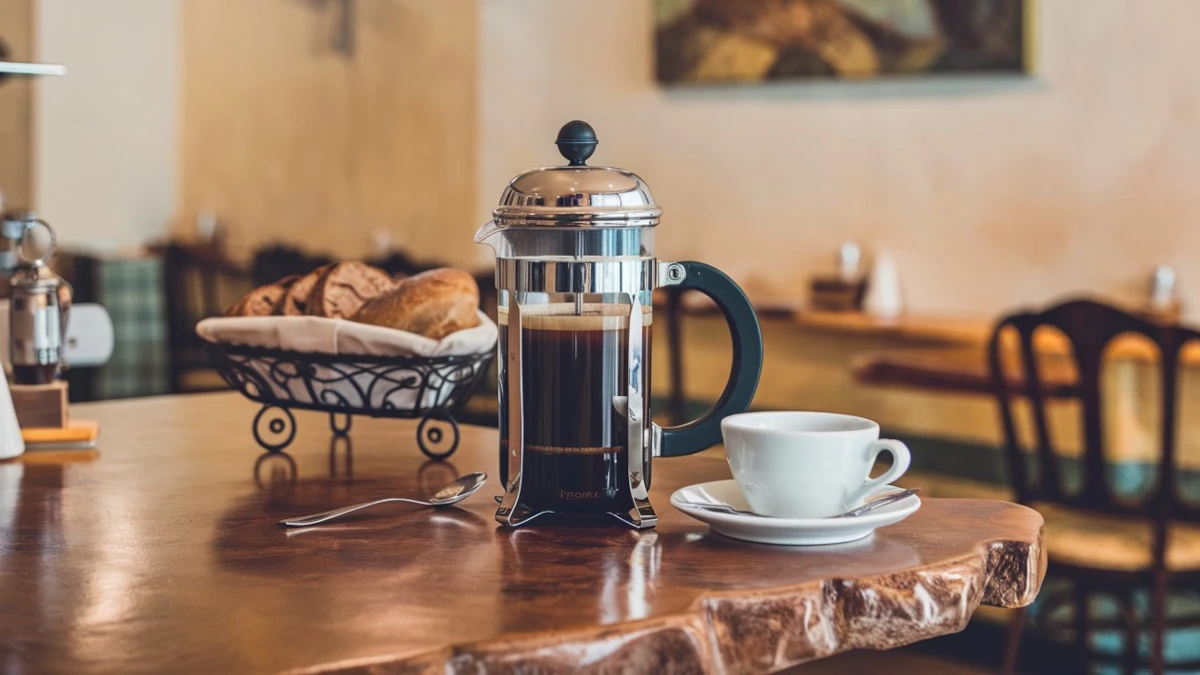
Want richer, smoother coffee at home without fancy gear?
A French press—also known as a cafetière or press pot—is one of the easiest and most affordable ways to brew bold, flavorful coffee. This guide explains how to use a French press, clean it properly, and appreciate its unique place in coffee culture.
Whether you’re just starting out or looking to refine your brewing ritual, this guide will help you master French press coffee from start to finish.
Table of Contents
What Is a French Press?
Definition and Key Features
The French press is a simple, manual coffee maker that uses a metal or nylon mesh filter to steep and separate ground coffee from water. Unlike drip machines or espresso makers, it allows coffee oils and fine particles to remain in the brew, creating a full-bodied, rich cup.
Key Components:
- Carafe: Typically glass or stainless steel
- Plunger: Presses the grounds to the bottom
- Mesh Filter: Separates coffee grounds from liquid without a paper filter
Related Names Around the World
Depending on where you are, the French press goes by many names:
| Region | Common Name |
|---|---|
| North America | French Press / Coffee Press |
| UK & Ireland | Cafetière |
| Australia & S. Africa | Plunger Coffee |
| Italy | Caffettiera a stantuffo |
| Germany | Kaffeepresse / Presskanne |
| France | Cafetière à piston |
A Brief History of the French Press
The Myth vs. The Facts
According to legend, a Frenchman accidentally invented the press while making coffee outdoors, forgetting to add the grounds until after boiling. Improvising with a screen, he created a surprisingly clean brew. While charming, this story isn’t historically verified.
Timeline of Innovations
- 1852 (France) – Mayer & Delforge patent a primitive version without a sealed plunger.
- 1929 (Italy) – Attilio Calimani adds a spring-sealed filter.
- 1935 (Italy) – Bruno Cassol enhances the design with a mesh-covered helical spring.
- 1958 (Italy/Switzerland) – Faliero Bondanini patents the Chambord model, widely adopted in Europe.
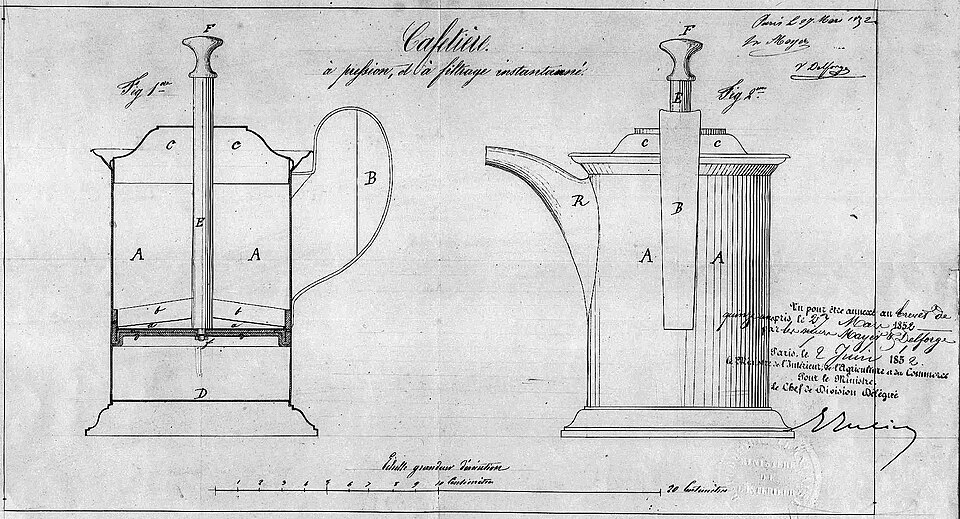
Mayer & Delforge’s 1852 patent
Trademark Battles and Global Adoption
In the late 20th century:
- The Chambord design became known as La Cafetière in the UK.
- Danish company Bodum acquired the original manufacturer in 1991.
- Legal disputes followed, but both brands now coexist globally.
- Pop culture moment: Featured in the spy film The Ipcress File (1965).
How to Brew French Press Coffee (Step-by-Step)
What You’ll Need
- French press coffee machine
- Coarse-ground coffee (breadcrumb texture)
- Hot water (195–200ºF / 90–94ºC)
- Digital scale (optional, but accurate)
- Timer (optional, helpful)
Brewing Instructions
- Preheat your French press with hot water, then discard it.
- Add coffee: Use about 30 g of coffee for 500 ml of water.
- Pour hot water evenly over the grounds.
- Stir once or twice to ensure even saturation.
- Let steep for 4 minutes (use a timer).
- Stir gently again, then skim off foam and floating grounds.
- Attach the lid and press the plunger down slowly and evenly.
- Let rest for 1–2 minutes, then pour and enjoy.
Pro Tips for Better Results
- Grind size matters: Too fine, and your coffee turns bitter or hard to plunge.
- Stick to the ratio: About 1:16 coffee to water for best extraction.
- Don’t rush the plunge: A slow press improves clarity and body.
Cleaning and Maintenance Tips
Why Cleaning Matters
Leftover coffee oils and grounds can quickly turn rancid, affecting taste. Regular cleaning keeps your French press in top form.
How to Clean Your French Press
- Disassemble all parts after each use.
- Rinse thoroughly, especially the mesh filter.
- Dishwasher safe? Most models are—but double-check the manual.
- Deep clean weekly: Use baking soda or vinegar to remove lingering oils.
French Press vs Other Brewing Methods
Flavor and Body Comparison
Unlike paper-filtered brews, French press coffee retains more oils and fine particles, resulting in a richer, fuller cup. It’s perfect for those who enjoy texture and depth in their coffee.
Pros and Cons
✅ Pros:
- Full-bodied flavor
- No paper filters needed
- Inexpensive and portable
❌ Cons:
- Sediment at the bottom of your cup
- Requires manual effort and cleanup
- Not ideal for large servings
Why Choose the French Press?
Perfect for Beginners and Aficionados
Its simplicity and control make the French press perfect for anyone—from curious newcomers to seasoned home brewers.
Affordable and Sustainable Brewing
No pods, no electricity, no waste. Just water, coffee, and your cafetière. It’s one of the most eco-friendly ways to make coffee.
Cultural and Ritual Appeal
Using a French press isn’t just brewing—it’s a ritual. From bloom to plunge, each step invites mindfulness and connection to your cup.
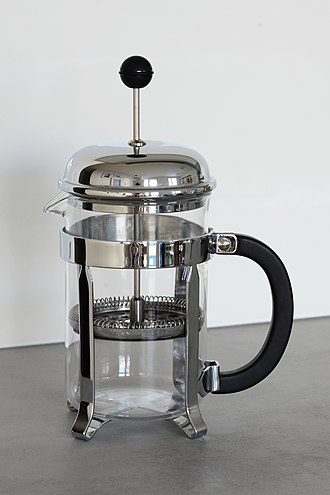
A French press
Conclusion
The French press is more than a coffee maker—it’s a timeless brewing tradition that blends history, culture, and flavor in every cup.
Now that you know how to use a French press, how to clean it, and where it came from, you’re ready to brew coffee that rivals any café—right in your kitchen.