


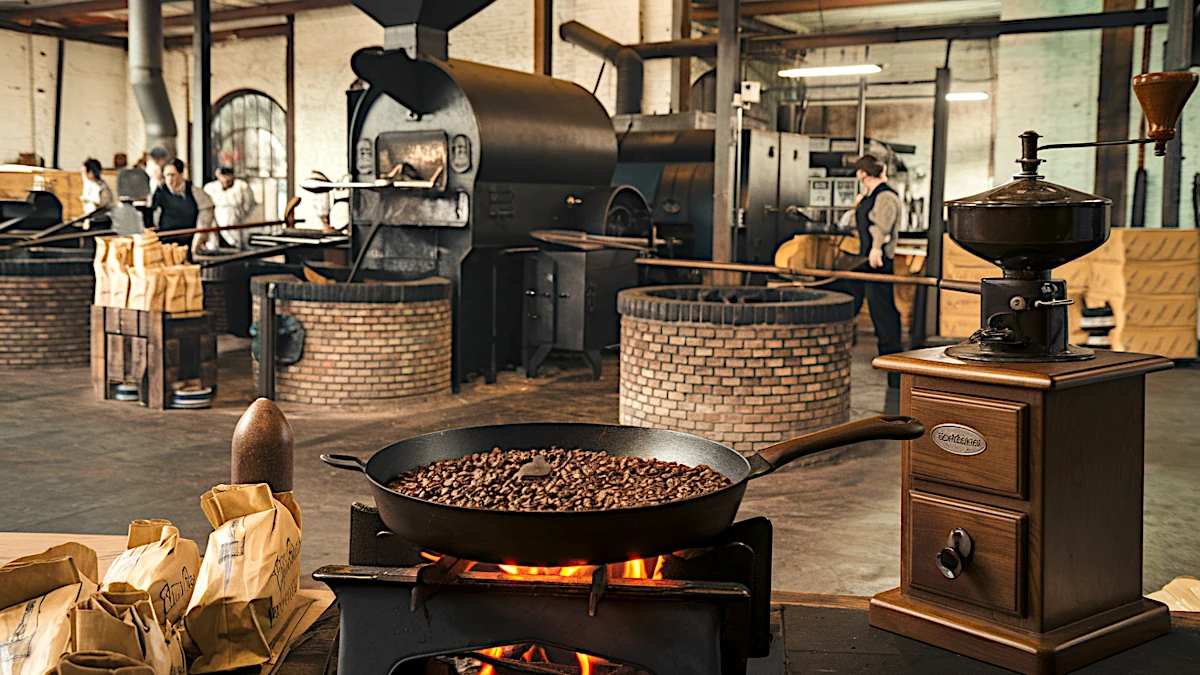
When was coffee first brought to America? The story of coffee’s introduction to the U.S. is as rich and intriguing as the beverage itself. From its arrival in the 17th century to its rise as a cultural icon, coffee has played a pivotal role in shaping American society. In this article, we’ll explore the history of coffee consumption in America, its early adoption, and its evolution into a cornerstone of modern life.
Table of Contents
The Arrival of Coffee in America
Early Introduction
Coffee first arrived in America in the mid-17th century, brought by European settlers who had already developed a taste for the brew. It gained initial popularity in New Amsterdam (modern-day New York City), a hub for trade and cultural exchange. As coffeehouses began appearing in the colonies, they became centers for commerce and conversation.
Role in Colonial America
During the 18th century, coffeehouses flourished as social and political hubs, frequented by merchants, politicians, and intellectuals. A pivotal moment in coffee’s rise came after the Boston Tea Party in 1773. As tea became politically charged, colonists turned to coffee as a patriotic alternative, solidifying its role as a preferred beverage in the young nation.
Coffee Culture After the Civil War
The Rise of Coffee Consumption
The Civil War played a significant role in popularizing coffee. Soldiers relied on it for energy, and upon returning home, they brought their coffee-drinking habits with them. By the late 19th century, the United States was importing nearly one-third of the world’s coffee, marking a turning point in coffee consumption and trade.
Home Roasting Traditions
Before industrialization, roasting coffee at home was common. Green coffee beans were purchased locally and roasted on stoves. However, this process often resulted in inconsistent quality. Wealthier households used hand-cranked roasters, while others relied on simpler, labor-intensive methods.
Industrialization of Coffee
Innovations in Roasting
The industrial era brought transformative changes to the coffee industry. Key innovations include:
- James W. Carter’s brick furnace roaster (1846): Improved roasting capacity using coal-fired furnaces.
- Jabez Burns’ self-emptying roaster (1864): Revolutionized the process with even roasting and easy removal of beans.
These advancements made roasted coffee more accessible, paving the way for mass production.
Emergence of Coffee Brands
The late 19th century saw the rise of iconic coffee brands, including:
- Arbuckle’s Ariosa Coffee: The first national brand, featuring innovative packaging and preservation techniques.
- Folgers Coffee: Established during the California Gold Rush, it became synonymous with quality and convenience.
- Hills Brothers: Pioneered vacuum-sealed coffee in 1900, ensuring long-lasting freshness.
Evolution of Brewing Techniques
Traditional Brewing Methods
In early America, coffee brewing was simple but crude. Grounds were boiled with water for extended periods, producing a thin, bitter beverage. Additives like egg whites or fish gelatin were used to settle the grounds.
Key Innovations
- Old Dominion coffee pot (1859): Introduced an early form of the percolator, enhancing flavor extraction.
- Vacuum brewing methods: Emerged later, improving both taste and consistency.
These innovations laid the groundwork for modern brewing techniques, elevating the coffee-drinking experience.
Coffee as a Cultural Phenomenon
Socio-Cultural Impact
During the Industrial Revolution, coffee became a unifying beverage for workers and intellectuals alike. Coffeehouses evolved into spaces for business meetings, leisure, and cultural exchange, shaping urban social life.
Economic Growth of the Coffee Industry
As coffee consumption surged, it drove the growth of a national coffee trade network. Urban economies benefited from coffee imports, processing, and sales, cementing its role as a cornerstone of American commerce.
Conclusion: Coffee’s Legacy in America
From its introduction by European settlers to its transformation into a cultural icon, coffee’s journey mirrors America’s evolution. Key milestones include:
- Its rise as a patriotic alternative during the Revolutionary War.
- The shift from home roasting to industrialized production.
- Contributions of brands like Arbuckle’s, Folgers, and Hills Brothers.
Today, coffee continues to thrive as both a beloved beverage and a driver of economic growth, uniting generations through its rich history and enduring appeal.