


Coffee is more than just a beverage—it’s a cultural cornerstone with a rich and fascinating backstory. Coffee originated in Ethiopia, a country steeped in ancient traditions and captivating legends. Its journey from humble beginnings to global prominence is deeply rooted in mythology, history, and cultural exchange. In this article, we’ll explore the coffee origin, uncover the legend of Kaldi, and trace coffee’s transformative journey across the world.
Table of Contents
The Kaldi Coffee Story: A Magical Discovery
Who Was Kaldi?
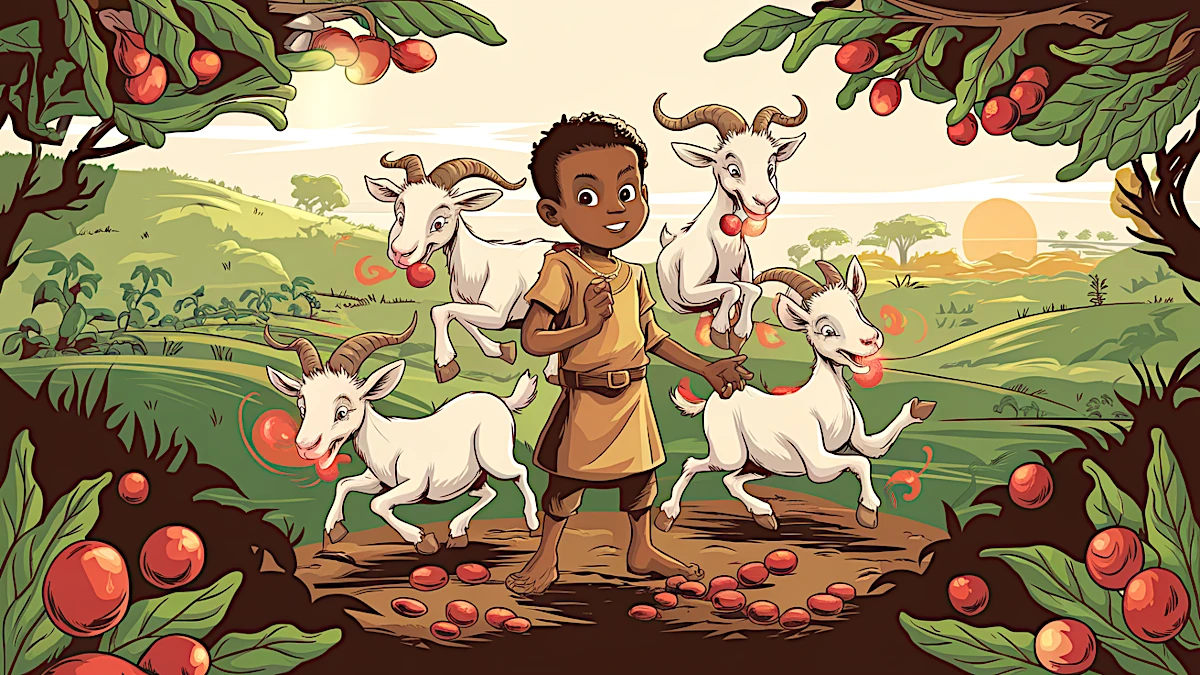
The tale of coffee begins in the lush highlands of Ethiopia, where a young goatherd named Kaldi observed a peculiar phenomenon. One day, Kaldi noticed his goats frolicking with unusual energy after munching on bright red berries from a shrub. Intrigued, Kaldi decided to try the berries himself and experienced a newfound vigor.
The First Encounter with Coffee Berries
Unsure of what he had discovered, Kaldi shared the berries with a local imam. According to one version of the legend, the imam boiled the berries to create an energizing drink, allowing him to stay alert during late-night prayers. In another variation, the imam discarded the berries into a fire, only to be captivated by the rich aroma of the roasted beans. These fateful experiments laid the groundwork for how coffee was discovered.
Variations of the Legend
While Kaldi’s story is widely told, it’s important to note that the details vary. Some accounts describe the berries being consumed raw, while others emphasize roasting and brewing methods. Regardless of the version, the story of Kaldi continues to captivate coffee enthusiasts worldwide.
Tracing the Roots: Coffee Origin and Historical Context
Archaeological and Historical Evidence
Although the coffee origin history is intertwined with legend, evidence supports Ethiopia as coffee’s birthplace. Charred coffee beans have been discovered in ancient sites, and coffee is referenced in Avicenna’s Canon of Medicine during the 11th century, highlighting its medicinal uses.
The Oromo Tribe and Coffee Culture
The Oromo tribe of southern Ethiopia played a significant role in coffee’s early use. They developed unique preparations, such as:
- Kuti: A tea made from lightly roasted young coffee leaves.
- Hoja: A drink combining dried coffee berry skins with milk.
- Bunna Qela: A roasted coffee bean snack mixed with butter, often used as sustenance during long journeys.
These practices reflect coffee’s cultural and functional significance long before it became a global commodity.
The Spread of Coffee Beyond Ethiopia
The journey of coffee didn’t end in Ethiopia. By the 15th century, traders introduced coffee to Yemen, where it flourished in the port city of Mocha. Yemeni Sufi monks popularized coffee for its ability to aid concentration during meditation, paving the way for its global spread. By the 17th century, coffee reached Europe, where it gained immense popularity in coffee houses.
The Impact of Kaldi’s Discovery on Modern Coffee Culture
Coffee as a Global Beverage
From its energizing properties discovered by Kaldi to its role in daily life today, coffee has become a staple in millions of households. Its transformation into a global beverage reflects its universal appeal and adaptability to diverse cultures and tastes.
Coffee Houses and Cultural Significance
The rise of coffee houses marked a pivotal moment in the history of coffee. In the Ottoman Empire, coffee houses became centers for social and political discourse. This tradition continued in Europe during the Enlightenment, where coffee houses were often referred to as “penny universities” for their role in fostering intellectual exchange.
Evolving Brewing Techniques
Modern brewing techniques, from espresso machines to pour-over methods, owe their roots to early experiments with coffee berries. The rich aroma and energizing effects that captivated Kaldi now inspire baristas and coffee lovers to innovate while preserving the legacy of coffee’s origins.
Conclusion: Savoring the Legacy of Kaldi’s Discovery
The story of Kaldi and the discovery of coffee is more than a legend; it’s a testament to human curiosity and cultural evolution. From the Ethiopian highlands to bustling coffee shops around the globe, every sip of coffee is a connection to its rich heritage.
Next time you enjoy your morning brew, remember Kaldi’s magical encounter with the coffee berries. This timeless tale reminds us to appreciate the history, culture, and tradition behind every cup of coffee.