


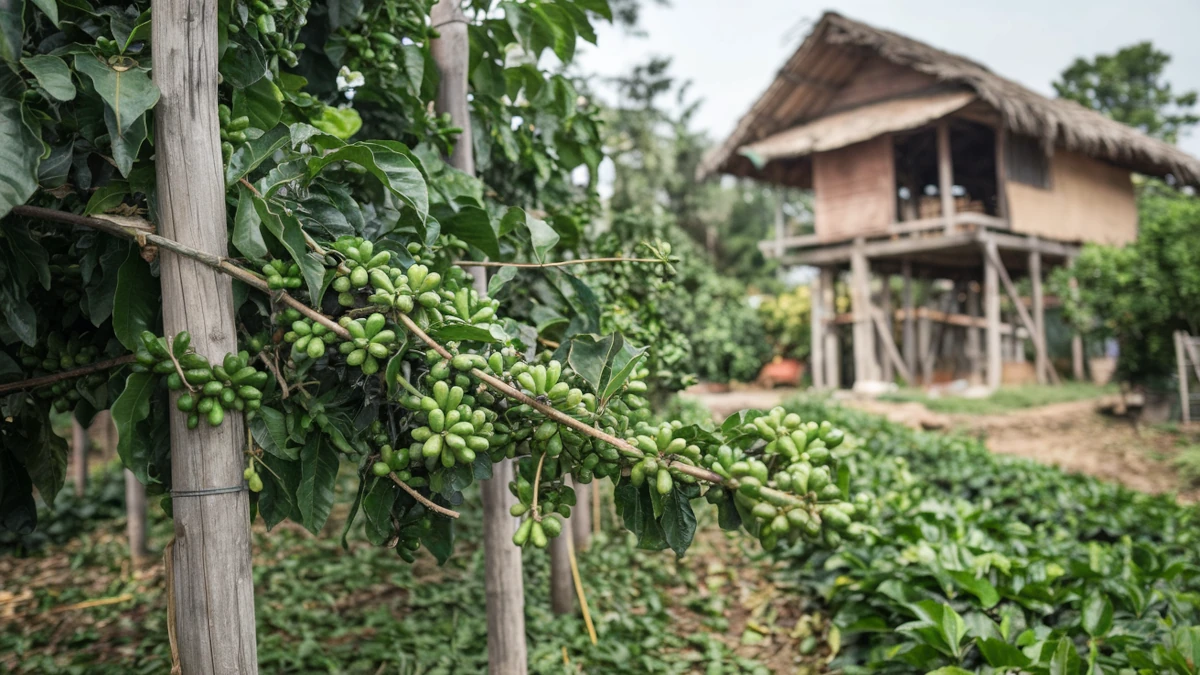
Vietnam coffee is a global success story, transforming from a minor producer to the world’s second-largest coffee exporter, driven by Robusta production and economic reforms. Today, Vietnam coffee is synonymous with quality and affordability, making it a key player in the global coffee trade. This article explores Vietnam’s rise as a coffee powerhouse, its economic reforms, smallholder farming success, and the sustainability challenges it faces. By the end, you’ll understand how Vietnam coffee became a global phenomenon and its impact on the coffee industry.
Table of Contents
The History of Vietnam Coffee
Early Beginnings: Missionaries and Colonial Influence
Coffee was introduced to Vietnam in the 1850s by missionaries, but it remained a minor crop during French colonial rule. Limited infrastructure and focus on other crops meant coffee production didn’t take off until much later.
Post-War Recovery: Rebuilding the Coffee Industry
By 1975, after the Vietnam War, only 60 hectares of coffee remained due to the devastation of the conflict. The Communist regime sought to stabilize the economy by encouraging migration to the Central Highlands, where state farms and cooperatives were established. Coffee became a key export to Soviet Bloc allies, laying the foundation for future growth.
Vietnam’s Rapid Rise in Coffee Production
From 22nd to 2nd: A Remarkable Transformation
Vietnam’s coffee industry saw a dramatic turnaround. From being the 22nd largest producer in 1988, it surpassed Colombia to become the second-largest coffee producer by 1999. This growth was driven by a 24% annual increase in output between 1988 and 1999, far outpacing competitor countries.
Robusta: The Key to Success
Vietnam’s dominance in Robusta coffee production has been a game-changer. Robusta, known for its strong flavor and high caffeine content, thrives in Vietnam’s climate. Today, Vietnam is the world’s largest exporter of Robusta coffee, accounting for a significant share of global production.
Economic Reforms and Smallholder Farming
The 1980s Reforms: A Turning Point
The economic reforms of the 1980s marked a turning point for Vietnam coffee. The shift from state-controlled farms to private smallholders led to a surge in production. By the 1990s, land was transferred to private hands, empowering farmers to take control of their livelihoods.
Smallholder Success: The Backbone of Vietnam Coffee
By 2000, 90% of coffee production was managed by smallholders farming plots of less than 1 hectare. The state supported these farmers through land subsidies, financial credits, and technical assistance, such as access to fertilizers. This model not only boosted production but also improved rural livelihoods.
The Role of Vinacafe and State Control
Vinacafe: Driving Vietnam’s Coffee Industry
In 1995, Vinacafe, the state body responsible for the coffee industry, was transformed into the Vietnamese National Coffee Corporation. Today, it controls 40% of the country’s coffee exports and operates state farms, processing units, and trading services.
State Farms and Processing Facilities
Vinacafe also collaborates with global players like Nestlé, operating one of Vietnam’s two instant coffee facilities. This partnership has helped Vietnam establish a strong presence in the global coffee market.
Challenges and Sustainability
Environmental Impact: Deforestation and Land Use
The rapid expansion of coffee farming led to aggressive deforestation in the Central Highlands. While this boosted production, it also caused long-term environmental consequences, including soil degradation and loss of biodiversity.
Market Fluctuations and Economic Risks
The glut of coffee supplies after 1998 led to a dramatic drop in prices, exposing the vulnerability of smallholders to market changes. This highlighted the need for better market regulation and sustainable practices.
Vietnam Coffee Today: A Global Powerhouse
Vietnam’s Role in the Global Coffee Market
Today, Vietnam is a key player in the global coffee trade, contributing to the affordability and availability of coffee worldwide. Its integration into the global economy post-Cold War has been a remarkable success story.
Future Prospects and Challenges
Looking ahead, Vietnam faces the challenge of balancing growth with sustainability. Innovations in farming practices and processing techniques will be crucial to maintaining its position as a global coffee powerhouse.
Conclusion
Vietnam coffee’s rise is a story of economic reforms, smallholder success, and global integration. From its humble beginnings to becoming the world’s second-largest coffee producer, Vietnam has transformed its agricultural potential into a global success. However, challenges like environmental sustainability and market volatility remain. Understanding Vietnam’s journey offers valuable insights into the global coffee industry and the importance of balancing growth with stability.