


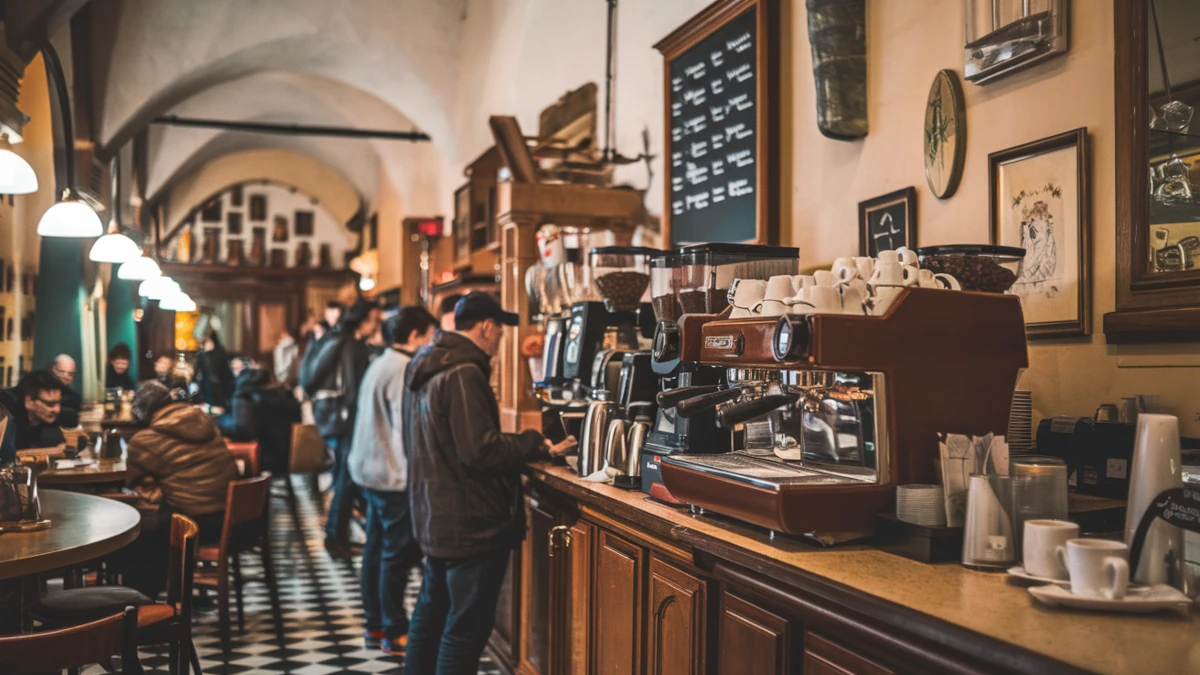
Coffee in Italy isn’t just a beverage; it’s a lifestyle, a tradition, and a national icon. From the invention of the first espresso machine to the rise of coffee bars and iconic brands like Lavazza, Italy coffee culture has become synonymous with passion and innovation. This article takes you on a journey through the history, evolution, and cultural significance of Italian coffee, offering insights into its lasting impact on daily life and global coffee trends.
Table of Contents
The Birth of Espresso: Italy’s Coffee Revolution
Early Innovations in Espresso Machines
The origins of Italy’s coffee culture are deeply rooted in innovation. The journey began in 1905 with the invention of the La Pavoni Ideale, the first steam-pressure espresso machine. This groundbreaking invention allowed coffee to be brewed faster, catering to the needs of bustling hospitality venues.
The real revolution, however, came in 1948 when Achille Gaggia introduced a lever-driven machine. This innovation utilized higher pressure (9 bars), reducing brewing time to 25 seconds and creating the iconic crema, a hallmark of modern espresso. This leap transformed coffee-making into an art form, setting the foundation for the Italian espresso culture we know today.
How Espresso Redefined Coffee in Italy
Espresso offered a richer, more concentrated flavor and became the base for numerous drinks like cappuccinos and macchiatos. Its quick preparation time aligned perfectly with the fast-paced lifestyle of post-war Italy, making espresso the centerpiece of Italian coffee culture.
Cappuccino: An Italian Icon
From Coffee with Milk to Espresso Artistry
Originally, cappuccino referred to a simple coffee-and-milk beverage. In Italy, it evolved into a refined drink, combining espresso with steamed milk and a frothy layer on top. This transformation not only elevated cappuccino’s status but also cemented its place as a morning staple in Italian coffee bars.
Cappuccino and Italian Traditions
In Italy, cappuccino is traditionally consumed only in the morning, often accompanied by a pastry. This ritual reflects the exclusivity of coffee culture in Italy, where enjoying a cappuccino at the bar is as much about the experience as the drink itself.
The Rise of Coffee Bars in Post-War Italy
Coffee Bars as Social Hubs
Post-World War II industrialization led to the rapid growth of coffee bars, offering affordable and quick coffee options for urban workers. A 1911 law that capped coffee prices encouraged Italians to enjoy their drinks while standing at the counter, fostering a communal atmosphere.
Standing at the Counter: A Cultural Shift
Drinking coffee while standing became a cultural norm, emphasizing efficiency and sociability. Coffee bars evolved into social hubs, where people could connect, exchange ideas, or simply enjoy a brief escape from their routines.
Economic Impact: Making Coffee Accessible
Espresso and Affordable Coffee Blends
The espresso process allowed the use of cheaper beans, such as Robusta, without compromising quality. This accessibility fueled a surge in domestic consumption, which doubled between 1955 and 1970, making coffee an integral part of Italian life.
The Moka Express: Bringing Espresso Home
In 1933, Alfonso Bialetti introduced the Moka Express, an aluminum stovetop coffee maker. This innovation brought the coffee bar experience into Italian homes. While Moka coffee lacked the crema of espresso, it offered a rich, satisfying brew that became a household favorite.
Lavazza: Italy’s Coffee Powerhouse
The Brand That Revolutionized Italian Coffee
Founded in 1895, Lavazza became a symbol of Italian coffee excellence. Through innovative advertising campaigns, including animated commercials, Lavazza established itself as a household name. By the 1990s, it captured 45% of the at-home coffee market, cementing its status as an Italian icon.
Coffee Branding as a Cultural Phenomenon
Lavazza’s success highlighted the power of branding in Italian coffee culture. The company’s creative marketing strategies not only boosted its visibility but also contributed to the global perception of Italy as the coffee capital of the world.
Conclusion
Italy’s coffee culture is a captivating blend of history, innovation, and tradition. From the invention of the espresso machine to the rise of coffee bars and iconic brands like Lavazza, Italian coffee has evolved into more than just a drink—it’s a way of life. Whether enjoyed standing at a bar or brewed at home with a Moka pot, coffee in Italy continues to symbolize community, creativity, and cultural pride.
For coffee lovers around the globe, Italian espresso culture remains an enduring inspiration, offering a rich tapestry of flavors and traditions that celebrate the art of coffee-making.